
What Are Biocides and What Role Do They Play in Disinfectants?
The term biocide is composed of the syllables “bio,” meaning life, and “cide,” meaning to kill. The meaning of this term highlights the need for particular care when handling chemicals that destroy life in order to protect or preserve other life....

Use of Thinning Agents
Thinning agents, also called thinners, are liquids that reduce the proportion of chemical substances in a mixture. This helps adjust the consistency of paint so that it can be applied easily and efficiently. Paint thinners are solvents or blends of...

Properties of Solvents
In chemistry, a solvent is a substance that enables the uniform distribution of particles from another substance within a mixture. In a homogeneous solution, the dispersing agent is the component makes up the larger amount. In surface technology,...
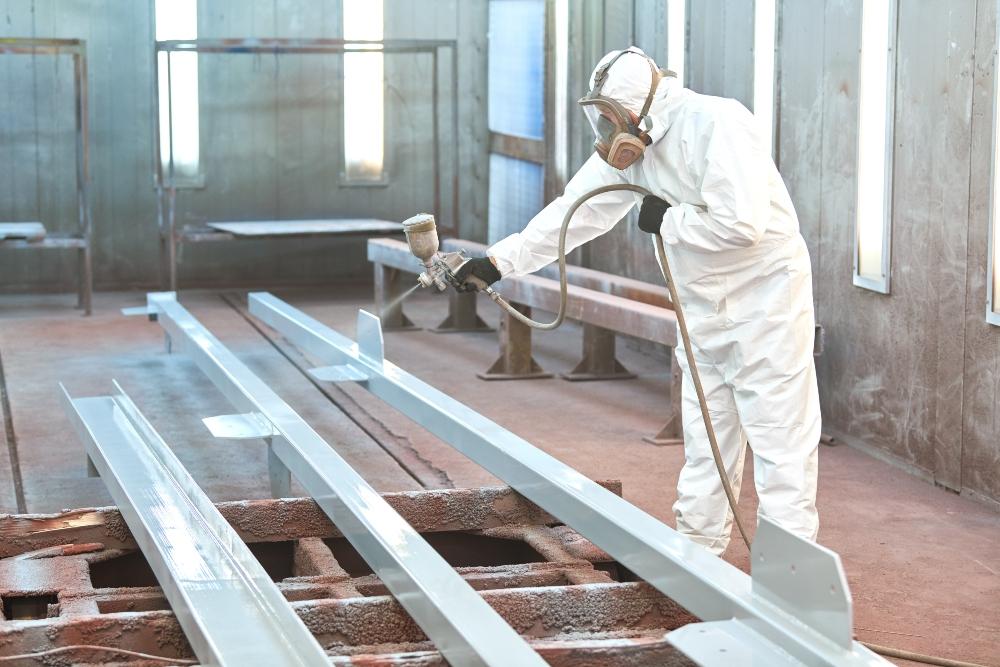
Powder Coating or Liquid Paint
« Which Painting Option is Recommended? » Both powder coating and liquid paint are widely used in surface coating. The decision between the two depends mainly on factors such as the material, contour, and size of the parts to be painted, as well as...

Hardmetal Coating
« Your Options for Surface Coating » The term hardmetal coating can refer to two different processes: applying a hardmetal layer to conventional metals, or enhancing existing hardmetal components with highly wear-resistant materials. These...

What Are Conversion Coatings and How Do They Form?
Conversion means transformation. A conversion coating, by definition, is simply a transformed layer. But what exactly is being transformed—and how? Let us take a closer look. What Exactly Is a Conversion Coating? In surface treatment, a conversion...

Cleaners: Solvent-Based or Water-Based?
« Which Industrial Cleaner for Which Purpose? » Industrial cleaners are designed to remove production-related contaminants from parts during manufacturing. They are also used to keep machines, equipment, and buildings clean. Different cleaning...
What is Iron Phosphating?
The Eiffel Tower is the symbol of Paris. Around 130 years ago, this steel structure was completed just in time for the World’s Fair and has lost none of its fascination to this day. More than 7 million visitors tour the tower, built under the...

The Use of Corrosion Inhibitors
Rusting is the most well-known form of chemical corrosion in metals, but it is far from the only one. Effective corrosion protection can be achieved using specialized chemical substances—so-called corrosion inhibitors—that prevent or at least slow...
Kluthe Magazine
Expert knowledge, technical developments and practical insights across the entire surface treatment process chain – with a focus on efficiency, quality and sustainability.