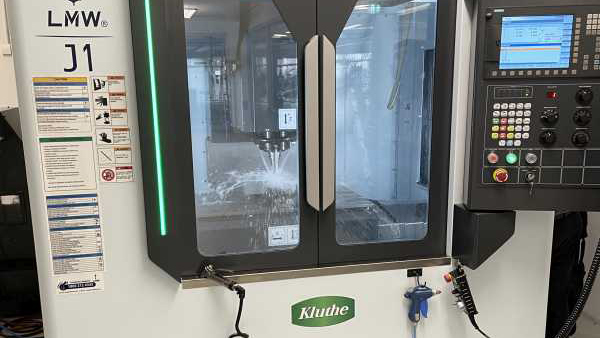
CNC machining (Computer Numerical Control) is a modern manufacturing technology that has reshaped industrial production. Known for outstanding precision, repeatability, and efficiency, it enables the reliable production of complex components across a wide range of industries. This overview covers the fundamentals of CNC machining, introduces the most common machine types, outlines the key benefits, and highlights typical application areas.
What Is CNC Machining?
CNC machining refers to the automated control of machine tools through computer-based programs. Unlike conventional, manually operated machining, CNC systems execute predefined programs that coordinate the movement of tool and workpiece with very high accuracy. The technology supports a range of processes including milling, turning, drilling, and grinding, all of which deliver precise and reproducible results. In day-to-day shop floor practice, this means producing complex geometries with consistent accuracy and economy — whether for one-off parts or large production runs.
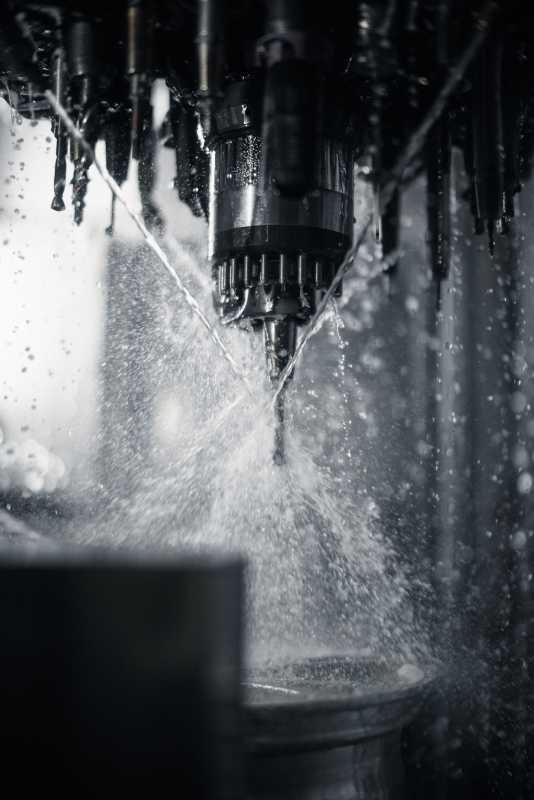
Key Steps in the CNC Machining Process
The machining process generally follows a clearly defined sequence. First, the part is designed digitally using CAD (Computer-Aided Design) software. The model contains all relevant dimensions, tolerances, and technical requirements. Based on this, CAM (Computer-Aided Manufacturing) software generates a machining program that defines the exact movements of the machine.
Next, the machine is set up: appropriate tools are loaded and the raw material is securely clamped. The machine then carries out the programmed operations and shapes the workpiece with high precision. After machining, the part is inspected and, if needed, sent on for additional finishing or surface treatment.
- Part Design
The part is first modeled digitally using CAD (Computer-Aided Design) software. The model captures all relevant dimensions, tolerances, and technical requirements. - Programming
Based on the design, CAM (Computer-Aided Manufacturing) software is used to generate a CNC program that defines the machine’s movements. - Machine Setup
The CNC machine is prepared by loading the appropriate cutting tools and securely clamping the raw material. - Machining
The machine executes the programmed operations and shapes the workpiece with high precision. - Inspection and Finishing
After machining, the part is inspected. If needed, additional finishing or surface treatment steps follow.
Types of CNC Machines
Machining centers come in a variety of configurations and are specialized for different manufacturing tasks. The two fundamental principles are milling and turning, which differ in how the tool and workpiece move relative to each other.
CNC Milling Machines
In CNC milling, rotating cutting tools remove material from a stationary workpiece. Milling metal is one of the most widely used processes in industrial manufacturing — whether carbon steel, stainless steel, or aluminum, CNC milling machines can shape virtually any metallic material precisely and economically. Milling stainless steel in particular places high demands on tooling and process control, since the material tends to work-harden and requires effective cooling. Milling aluminum, on the other hand, allows significantly higher cutting speeds and is especially common in the automotive and aerospace industries.
A defining feature of modern milling machines is their capability for 3D milling. In 3D milling, workpieces are machined not in two but in three or more axes simultaneously. This makes it possible to produce free-form surfaces, undercuts, and complex surface geometries that conventional methods cannot achieve. 3D milling is used wherever geometric complexity meets tight tolerances — for example in tool and mold making, medical technology, and prototyping.
Vertical Machining Centers (VMC)
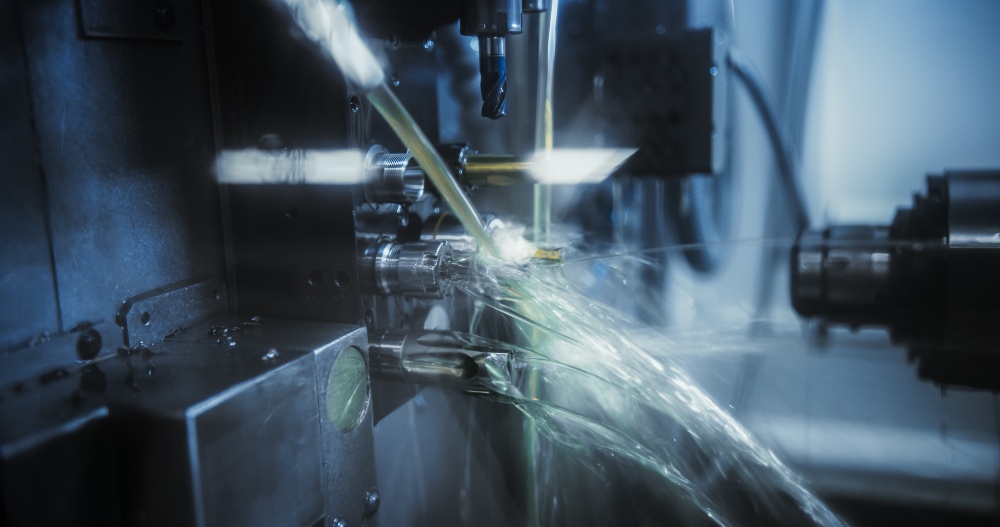
Vertical machining centers use a vertically oriented spindle and are available in 3-, 4-, and 5-axis configurations. 5-axis CNC milling in particular has become a key technology for demanding parts. With 5-axis CNC milling, the tool can approach the workpiece from almost any direction, allowing complex features to be machined in a single setup. This reduces setup times, improves dimensional accuracy, and significantly lowers manufacturing costs. Typical applications for 5-axis CNC milling include turbine components, medical implants, and tool and mold geometries with challenging features.
© Gorodenkoff – stock.adobe.com
Horizontal Machining Centers (HMC)
Horizontal machining centers are designed for high volumes and especially efficient series production. Because of the horizontal spindle orientation, chips fall away more easily, which improves process reliability during long production runs.
Double Column Milling Machines (DCMC)
For large and heavy workpieces, double column milling machines are used. Their rigid construction provides the stability and accuracy needed to machine massive parts with precision.
Lathes
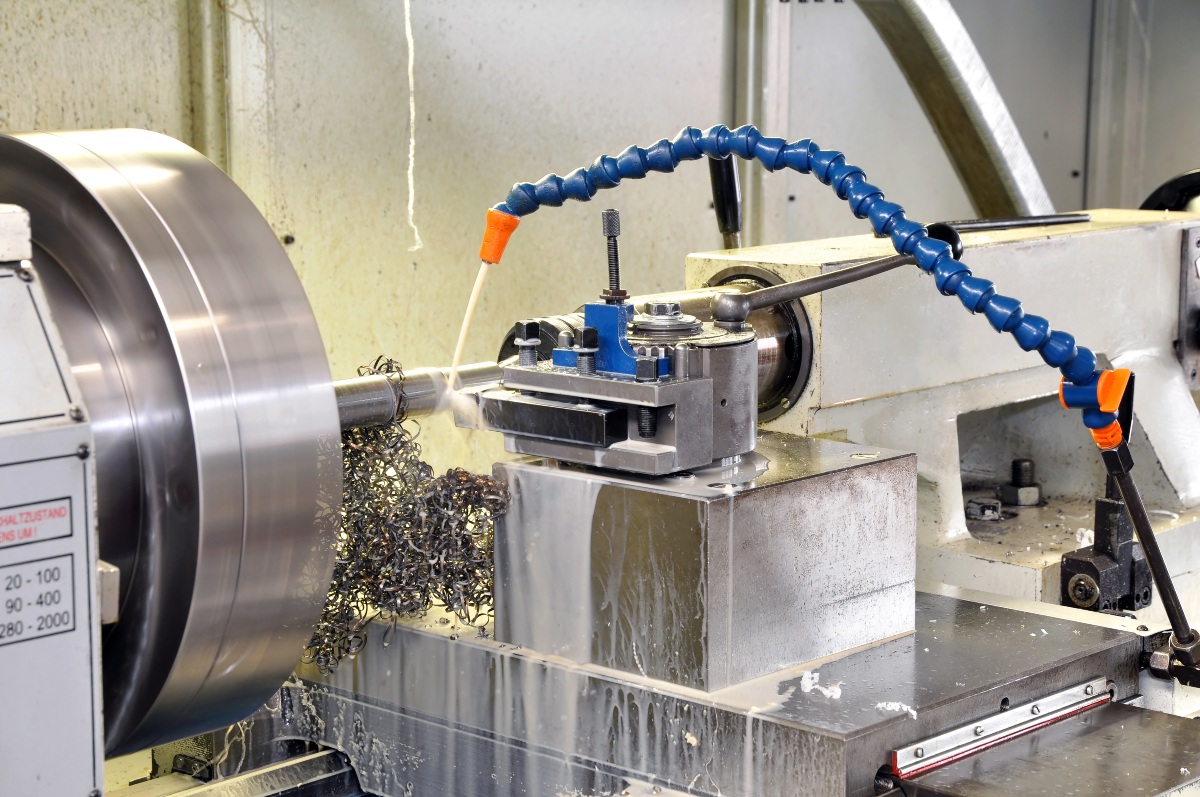
In turning, the workpiece rotates while a stationary tool removes material. This process is used primarily for rotationally symmetric parts such as shafts, bushings, and rings, and is known for its high speed and repeatability.
The Role of Metalworking Fluids in CNC Machining
Beyond machines, tools, and software, high-quality metalworking fluids play a decisive role in the efficiency, quality, and economics of machining. They have a direct impact on tool life, surface finish, process stability, and overall cost — and are therefore far more than mere consumables. They are strategic process elements.
Water-Miscible Coolants
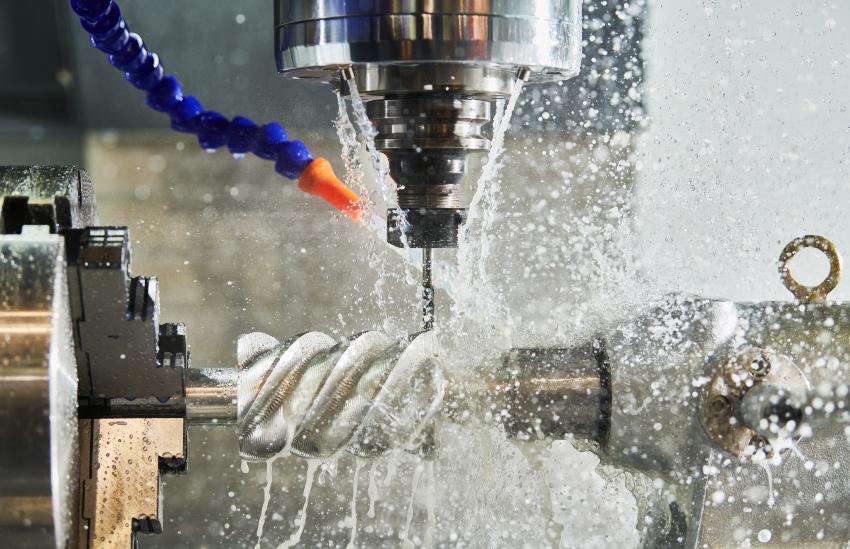
Water-miscible coolants are used in many applications because of their excellent cooling performance. By dissipating heat effectively, they help maintain dimensional accuracy and reduce thermal stress on tools and machines. They also provide essential functions such as lubrication, chip flushing, and corrosion protection. Well-formulated products enable longer tool life, higher cutting speeds, improved surface quality, and lower scrap rates. Their stability and long service life also reduce maintenance effort and operating costs.
© Kadmy – stock.adobe.com
- longer tool life
- higher cutting speeds
- improved surface quality
- lower scrap rates
Neat Cutting Oils
Neat cutting oils are used primarily in demanding machining operations where lubrication is the critical factor. They significantly reduce friction at the cutting edge and are ideal for difficult materials or processes such as deep-hole drilling, tapping, and gear cutting. High-performance neat oils minimize tool wear, improve process reliability, ensure consistent surface quality, and reduce energy consumption through lower friction.
High-performance neat oils:
- minimize tool wear
- improve process reliability
- ensure consistent surface quality
- reduce energy consumption through lower friction
In doing so, they make a meaningful contribution to lowering total operating costs.
Impact on Efficiency and Cost
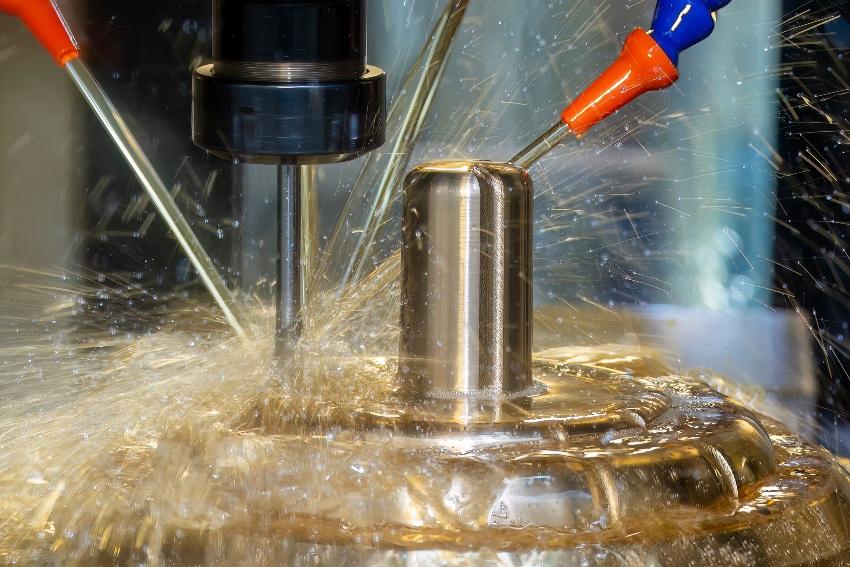
The selection and quality of metalworking fluids has a direct effect on the economics of manufacturing. Optimized products improve machine utilization, reduce tool changes, prevent rework, and support stable production planning. Metalworking fluids are therefore not simple consumables, but strategic process factors for efficiency and profitability.
© Pixel_B – stock.adobe.com
Common Materials Used in CNC Machining
CNC machines can process a wide variety of materials. Among ferrous metals, carbon steel, stainless steel, and cast iron dominate. Carbon steel is strong and versatile; stainless steel offers excellent corrosion resistance and is widely used in medical and food-related applications; cast iron is durable and stable, for example in engine and machinery components.
Non-ferrous metals such as aluminum, copper, and titanium round out the spectrum. Aluminum is lightweight and easy to machine, ideal for automotive and aerospace. Copper offers excellent electrical conductivity, while titanium combines high strength with corrosion resistance. Composites such as carbon fiber and fiberglass can also be machined with high precision.
Ferrous Metals
- Carbon Steel – strong and versatile
- Stainless Steel – corrosion-resistant, common in medical and food applications
- Cast Iron – durable and stable, e.g. for engine and machinery components
Non-Ferrous Metals
- Aluminum – lightweight and easy to machine, ideal for automotive and aerospace
- Copper – excellent electrical conductivity
- Titanium – high strength and corrosion resistance
Plastics
- Polycarbonate – impact-resistant and stable
- Acrylic – transparent and easy to machine
- Nylon – wear-resistant, often used for gears
Composites
- Carbon Fiber – extremely lightweight and strong
- Fiberglass – durable and versatile
Advantages of CNC Machining
The process stands out for a combination of precision and efficiency that manual methods cannot match. Tight tolerances and high repeatability make it the first choice for series production. Automated processes reduce error rates and allow flexible processing of a wide range of materials and geometries. In demanding industries such as aerospace and medical technology, these characteristics are indispensable.
© industrieblick – stock.adobe.com
- High precision and tight tolerances
- Repeatability in series production
- High efficiency through automated processes
- Flexibility across materials and geometries
- Lower error rates through automation
Applications of CNC Technology
Today, CNC technology is essential in nearly every manufacturing-intensive industry. In aerospace and automotive, it makes it possible to produce highly precise components with tight tolerances. Medical technology benefits from the repeatability achieved when machining implants and instruments. In electronics, fine features are milled and drilled, while construction and heavy machinery rely on CNC for large, robust components.
Choosing the Right CNC Machine
When selecting a CNC machine, application requirements, technical capabilities, control and software technology, and service and maintenance offerings should all be carefully considered. Ultimately, what matters most is the cost-benefit ratio in the context of your specific production environment. A sound decision accounts not only for the initial investment but also for ongoing operating costs — including process media such as metalworking fluids, which significantly influence the efficiency and economics of the entire operation.
The following aspects should be considered when choosing a machine:
- Application requirements
- Technical capabilities
- Control and software technology
- Service and maintenance
- Cost-benefit ratio