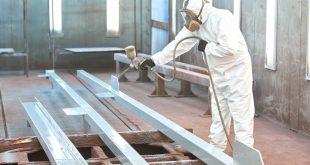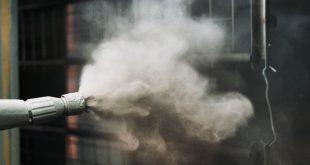
« Which Painting Option is Recommended? » Both powder coating and liquid paint are widely used in surface coating. The decision between the two depends mainly on factors such as the material, contour, and size of the parts to be …
Read more »Forming & Protection
Hardmetal Coating
« Your Options for Surface Coating » The term hardmetal coating can refer to two different processes: applying a hardmetal layer to conventional metals, or enhancing existing hardmetal components with highly wear-resistant materials. These composites consist of a metallic binder, …
Read more »What Are Conversion Coatings and How Do They Form?
Conversion means transformation. A conversion coating, by definition, is simply a transformed layer. But what exactly is being transformed—and how? Let us take a closer look. What Exactly Is a Conversion Coating? In surface treatment, a conversion coating refers to …
Read more »What is Iron Phosphating?
The Eiffel Tower is the symbol of Paris. Around 130 years ago, this steel structure was completed just in time for the World’s Fair and has lost none of its fascination to this day. More than 7 million visitors tour …
Read more »Temperature Resistance of Coatings and Lubricants
« Why Heat Resistance Is a Critical Property in Surface Technology » In many industrial facilities, the surfaces of reactors, furnaces, and chemical plants must endure high temperatures and frequent thermal cycling. Lubricants used during machining face similar demands, where …
Read more »Pickling and Passivation
« What does it mean? » Pickling and passivation are chemical or electrochemical surface treatment processes that deliberately modify the properties of the material’s surface layers. These methods are commonly used in the pretreatment of metal workpieces to create corrosion …
Read more »Process Parameters in Surface Technology
Process parameters in surface technology are measurement variables that define the conditions influencing coating or material treatment procedures. Chemical and physical processes are triggered when an external influence disturbs the existing equilibrium. As the system seeks to re-establish balance, other …
Read more »Metalworking Fluids: Composition and Ingredients
Metalworking fluids are essential for surface processing. But what composition do they have? And which ingredients are used? Learn more. Fluid Composition Fundamentals When machining speeds were limited by muscle power, heat generation played only a minor role. When machines …
Read more »Cold Forming of Metal
Cold forming is a metalworking process where materials are shaped under significant compressive or tensile forces with or without minimal preheating. This distinguishes cold forming from hot forming, with the dividing line being the recrystallization temperature. Formation of Material Microstructure …
Read more »Cooling lubricants for machining and forming processes
We are surrounded by products made from diverse materials and shapes. Manufacturing processes transform raw materials like metal or plastic into semi-finished products such as bars, tubes, and sheets. These intermediate forms are then processed further to create finished products, …
Read more »
Kluthe Magazine