« Preventing and Avoiding Material Damage »
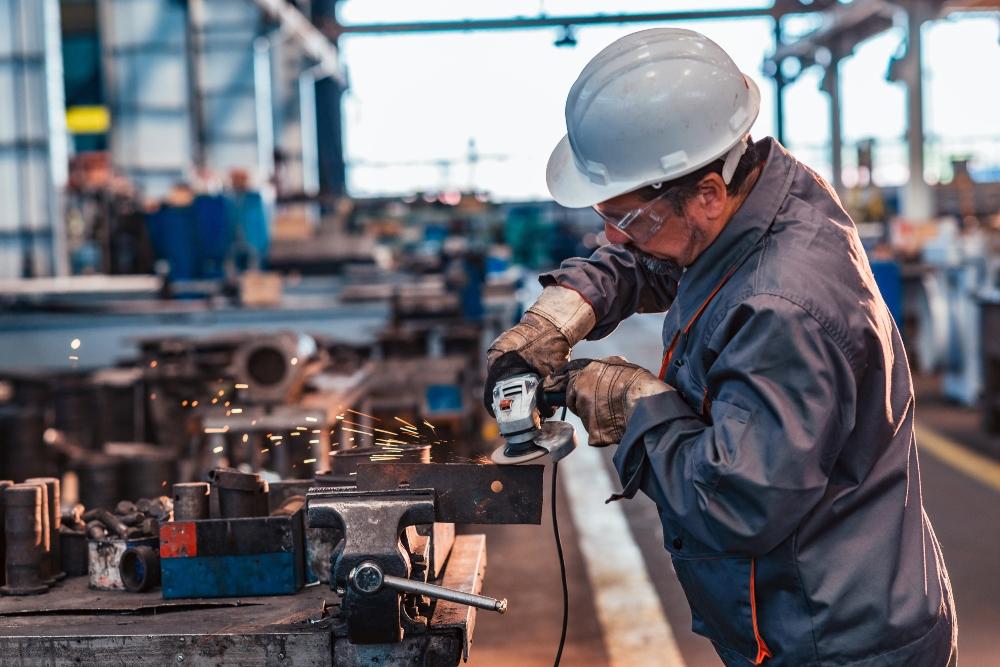
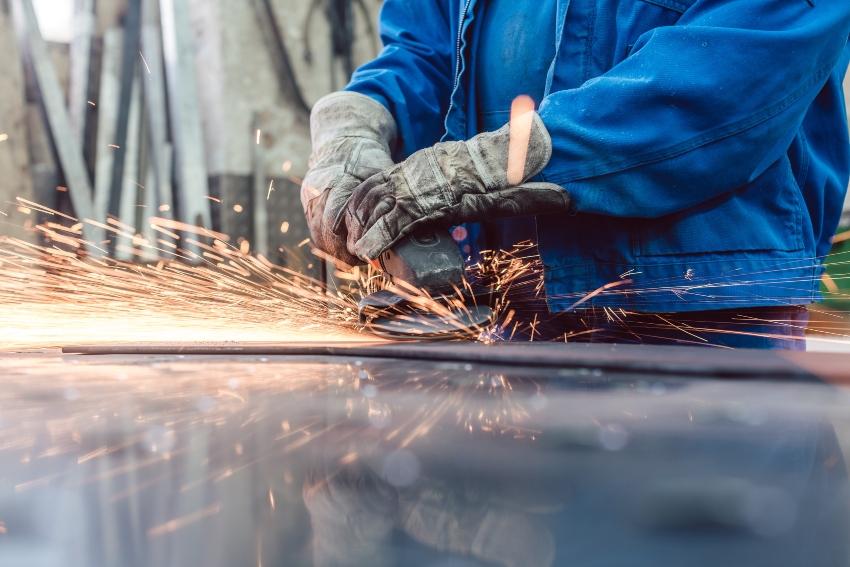
Anyone who has ever ground a weld seam with an angle grinder or sharpened a tool on a bench grinder is familiar with the impressive shower of sparks triggered by the heat generated in this process. Under unfavorable conditions, heat can build up during grinding. Temperatures can quickly be reached that make atmospheric oxygen highly reactive and grinding burn occurs. This type of material damage can be prevented by taking appropriate technical precautions. If prevention fails, the component is usually scrapped. In some cases, the affected material can be removed mechanically or chemically, allowing the part to be salvaged.
Factors Influencing Grinding Results – The Interaction of Material and Heat
In most cases, grinding is the final step in a complex manufacturing process, which makes failures at this stage are particularly costly. The appropriate grinding tool must be matched to the material, the required surface finish, and the specified dimensional tolerances.
Great care is also required when selecting the dynamic parameters, such as:
- Cutting speed of the grinding wheel
- Peripheral speed of the workpiece
- Feed rate
- Infeed
Another key focus is the dissipation of heat generated by friction and deformation. A distinction is made between wet and dry grinding. In dry grinding, most of the heat is carried away by the flying chips. The remaining heat dissipates into the material through thermal conduction.In wet grinding, the coolant performs this heat-removal function. Grinding burn occurs when local heating drives the material above its tempering temperature, a value that depends on the specific material. Insufficient cooling is often suspected as the cause. However, if unfavorable influencing factors combine, more heat is generated than the cooling system can handle.
Heat Generation During Grinding
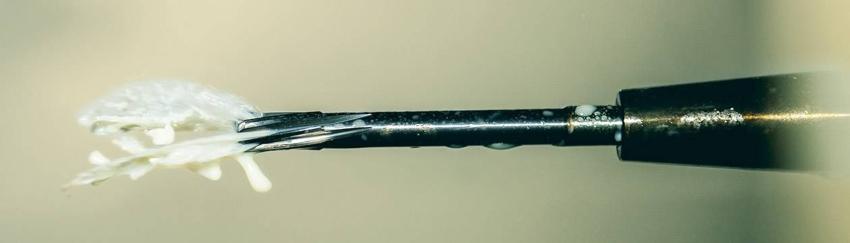
Material removal at the workpiece surface is performed by using hard abrasive grains with irregularly arranged cutting edges. These grains are held together by a bond made of ceramic materials, synthetic resins, or mineral compounds. Air-filled pores are distributed between the grains and the bond, allowing coolant to reach the grinding zone.
The cutting edge penetrates the workpiece surface and deforms the material until a small chip breaks away. The stress-strain behavior of the material determines whether the chip fractures quickly or tears off after prolonged deformation. The longer a cutting edge remains engaged with a chip, the more heat is generated. In addition, unlike a clean fracture point, the area around a tear-off point retains permanently deformed material. This results in mechanical stresses that can cause cracks.
© Kzenon – stock.adobe.com
Grinding Burn Is Caused by Both High Temperatures and Permanent Strain
Excessively high temperatures are indicated by temper colors that become visible on the surface after cooling. Fine cracks are even more dangerous. For this reason, dynamically loaded components such as shafts and spindles are often subjected to crack inspection after grinding.
The risk of grinding burn is particularly high with tough materials. To prevent grinding burn, grinding wheels with a highly porous structure are used for tough materials, as they generate less heat. For hard materials, these wheels clog too quickly, so wheels with a finer pore structure are used instead. However, thermal damage can only be avoided with the appropriate grinding wheel if the dynamic parameters mentioned above are correctly set and the machines are carefully adjusted.
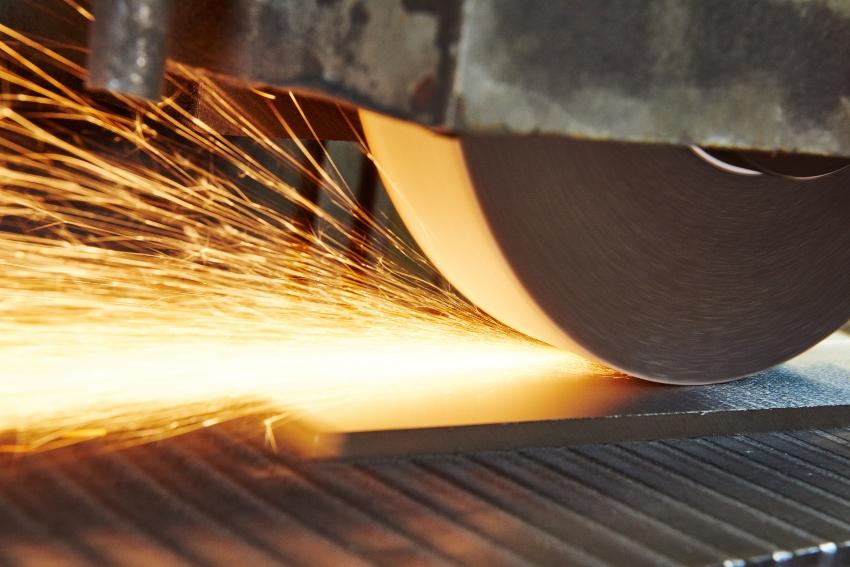
© Kadmy – stock.adobe.com
Friction Caused by Wheel Wear and Pore Clogging
During operation, the grains in the grinding wheel wear down and become dull. As a result, they require greater pressure to remove chips. Ideally, they loosen from the bond, break out of the structure, and expose fresh grains underneath.
One of the bond’s tasks is to hold the grains in place for as long as they are sharp and release them once they are worn. This process is known as the wheel’s “self-sharpening” effect. If an unsuitable bond is selected for the application, the dull grains remain in the structure. The increased friction that follows can generate enough heat to cause grinding burn.
Open pores are essential for coolant performance. If they become clogged with grinding debris, coolant cannot reach the grinding zone and instead runs off without effect.
The result is heat buildup that can lead to material damage. Both issues can be prevented by dressing the grinding wheel in time. During dressing, the outer layer is evenly removed using a diamond dresser. This process is also referred to as “truing.” It becomes necessary whenever the temperature in the grinding zone rises excessively and the grinding pattern deteriorates.
On conventional grinding machines, the operator must rely on their experience to recognize the right moment to dress the wheel. This expertise is invaluable. CNC-controlled machines are typically equipped with temperature sensors that influence the dynamic parameters of the grinding process. However, this often suppresses symptoms rather than eliminating root causes.
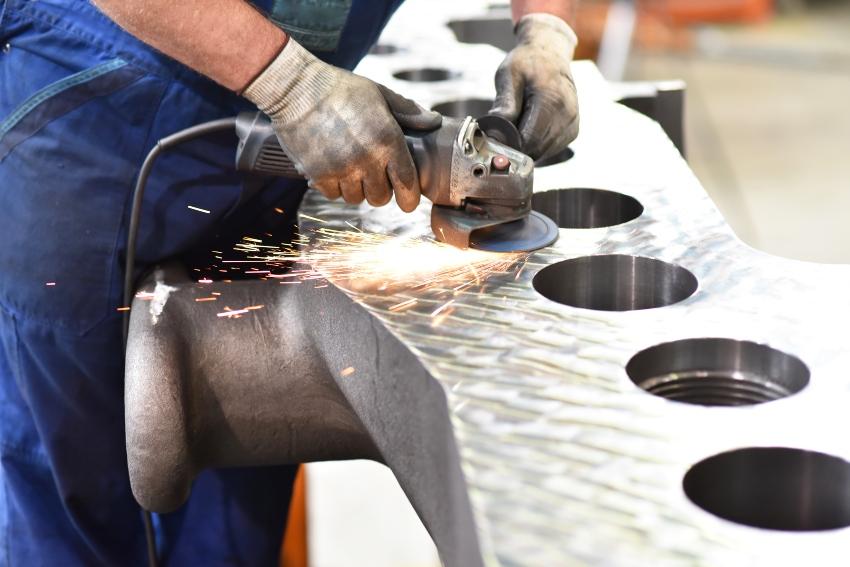
© industrieblick – stock.adobe.com
Incidental Causes of Grinding Burn
Surface irregularities resulting from errors in previous machining steps can contribute to thermal material damage during grinding. For example, if thin-walled components are clamped incorrectly during turning, elliptical or triangular cross-sections with rounded corners may result instead of true circular shapes. Parts may also warp during heat treatment. A straight shaft may become slightly bent, or a flat component may develop a slight curvature. Minor shape deviations that are invisible to the naked eye are not tolerated by the grinding wheel. In such cases, grinding burn can be avoided by checking geometric accuracy and straightening the parts if necessary.
Eliminating Grinding Burn
To minimize machining time, grinding allowances are often kept small. Grinding allowance refers to the material remaining above the final dimension that is available for the grinding process. If only a few thousandths of an inch of tolerance are specified for the final dimensions, there is very little room to correct errors. Prevention should always take priority over correction. Light traces of grinding burn can be removed by regrinding or by pickling. During pickling, thin surface layers are dissolved and rinsed off using acidic or alkaline solutions. However, this method involves risk and fine cracks may still be present in the material. Under alternating mechanical loads, these cracks can grow and ultimately lead to component failure. A final crack inspection should therefore always be performed after removing grinding burn.