
« Effectively Prevent Disruptions in the Paint Shop »
Paint coagulation is a process within the wastewater treatment of paint shop systems. This process enables paint particles and water to be separated, allowing the water to be returned to the system. The remaining paint sludge is disposed of. But how exactly does this process work?
What Role Does Water Play in a Paint Shop?
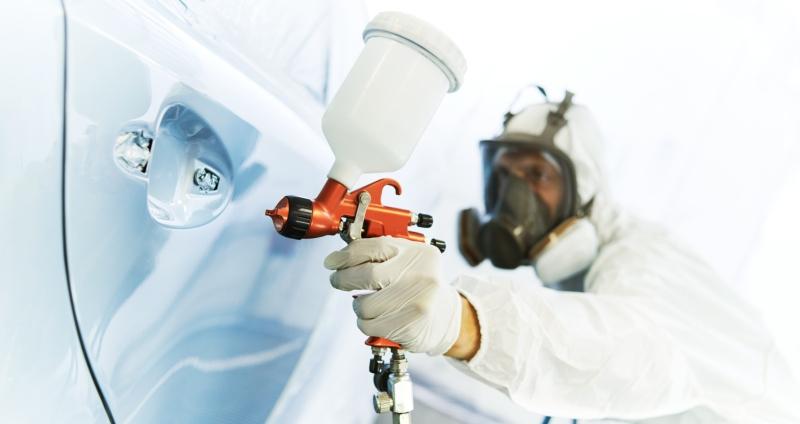
In paint shops, coatings are finely atomized and sprayed onto the surfaces of parts. A portion of the paint never reaches the parts and remains suspended in the air or lands on surrounding walls. This portion is referred to as overspray. Overspray would quickly cause operational disruptions in a paint shop. To prevent this, it is partially extracted and partially bound with water. Before the overspray can be separated from the water again, paint coagulation is required.
 How Does the Paint Enter the Water?
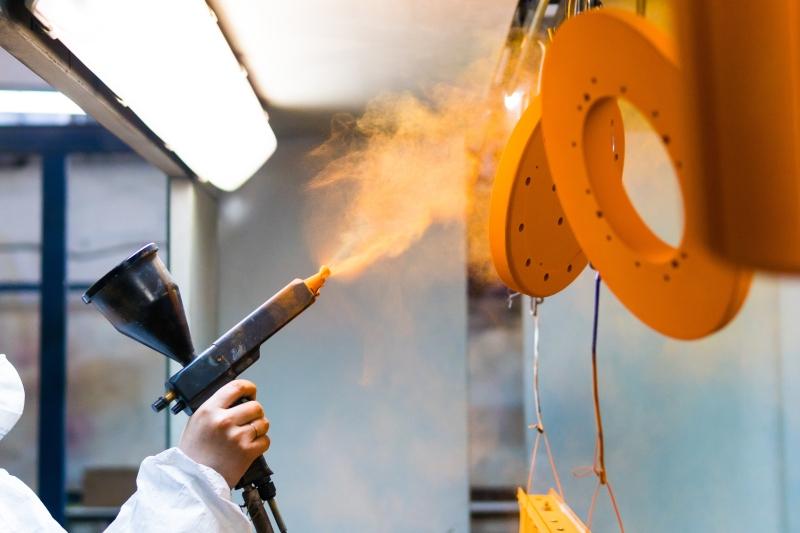
Coating operations in metal and plastic finishing are conducted in spray booths or at manual workstations. In both cases, paint mist is conveyed by exhaust systems to downstream air treatment.
Manual Workstations
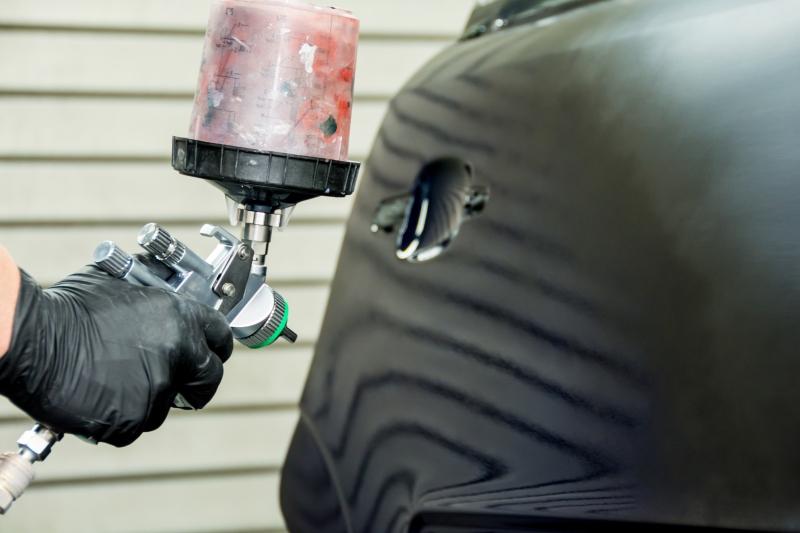
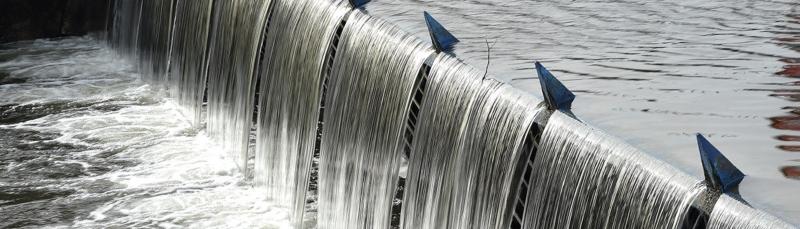
Manual coating is often performed in front of a water curtain. Excess paint is captured by a downward-flowing water stream and carried away. This process can be supported by drawing the paint mist toward the water curtain. The water is recirculated within the system. To enable reuse, it is cleaned using the paint coagulation process.
Spray Booths
In spray booths, water curtains also protect the walls from contact with paint particles. The liquid collects in a floor pan and is pumped from there to the treatment system, where paint coagulation begins.
Paint Removal from Exhaust Air
Paint can be removed from exhaust air using filters. However, this increases waste volumes due to the spent filter materials. For this reason, exhaust air is generally treated with scrubbers. When water and exhaust air come into contact, the paint remains in the water. The cleaned air can then be discharged into the environment.
© Aleksei / Fotolia.com
How Is the Paint Separated from the Water?
The fine atomization that ensures optimal coating results makes water treatment more challenging. Paint droplets with diameters of only a few nanometers remain suspended in the water, forming colloidal solutions.
The method used to separate these solutions depends on whether the paint is to be recovered or disposed of. Water-based paints can be reclaimed using physical processes. Solvent-based paints are separated from water using chemical processes. Paint coagulation is part of the chemical treatment of paint-containing wastewater.
Recirculation of Water-Based Paints
Processes available for reclaiming water-based paints include ultrafiltration, vacuum evaporation, and electrophoresis.
During ultrafiltration, special membranes retain the larger paint molecules while allowing smaller water molecules to pass through. Vacuum evaporation makes it possible to concentrate the solution at low temperatures. The lower the pressure, the lower the boiling point. Electrophoresis takes advantage of the electrical charge of paint particles. In an electric field, they migrate toward the electrode with the opposite charge, where they are captured and removed from the circulation system.
Chemical Separation
Solvent-based paints are not suitable for recovery. In many cases, it is cost effective to dispose of water-based paints as well.
To separate the suspended particles, they must agglomerate in the water tank. Once they reach a certain size, they are heavy enough to sink or large enough to float. Sinking is referred to as sedimentation; floating is referred to as flotation. The agglomeration process itself is known as coagulation. The purpose of paint coagulation is to initiate the agglomeration process.
© karegg / Fotolia.com
How Is Paint Coagulation Achieved?
Coagulants
For paint coagulation, coagulants are mixed into the wastewater. These agents neutralize the electrical charge of similarly charged paint particles. As a result, the particles no longer repel one another and can aggregate. Certain components within the coagulants further promote agglomeration by encouraging particles to attach to them. This process is known as adsorption.
Flocculants
Through coagulation, larger particles form from the paint components. Flocculants then cause these particles to grow further and form flocs. Depending on their density, the flocs either rise or sink. The selection of coagulant and flocculant determines which outcome occurs.
Defoamers
Paint coagulation requires thorough mixing of all substances. If air is introduced during mixing, foam formation can occur and quickly lead to operational problems. Special defoamers prevent foam formation and cause existing foam to collapse.
What Happens to the Mixture of Wastewater and Additives?
During coagulation and flocculation, wet paint sludge forms and is removed either from the surface of the liquid or from the bottom of the tank.
To reduce waste volumes and improve suitability for energy recovery, the sludge must be dewatered as effectively as possible. This is achieved using filter baskets or dewatering containers.
Filter Baskets
Filter baskets are wire frames fitted with filter cloths or filter bags. The filter material allows water to pass through while retaining solids. Filter presses, which apply additional pressure, increase efficiency. When pressure is generated using compressed air, the equipment is referred to as a pressure filter (known in European practice as a “Nutsche”). The water collected downstream of the filter is returned to the circulation system.
Dewatering Containers
Dewatering containers are perforated tanks that allow water to drain away. Their base is either inclined or shaped like a horizontal half-cylinder. This creates a low point where the liquid collects. In the lower section of a dewatering container, a collection tank equipped with a pump returns the water to the circulation system.
Anti-Tack Effect of Additives
The wet paint sludge is conveyed by pumps, pipelines, and fittings to the dewatering equipment. All system components are at risk of sludge buildup.
To prevent pipelines, perforations in dewatering containers, and filter materials from clogging, the agents used for paint coagulation must provide an anti-tack effect. High-quality chemicals contain additives that reliably prevent components in the paint shop from sticking and allow for extended maintenance intervals.
© Kadmy / Fotolia.com
How Can Disruptions in the Paint Shop Be Prevented?
Use of Suitable Chemicals
The substances used for coagulation must be matched to the paint system, the coating line, and the sludge removal system, and must provide a high separation efficiency. Coagulation chemicals are also available for mixed wastewater streams containing both solvent-based and water-based paints.
Compliance with Specified Concentrations
Manufacturers provide the recommended concentrations in their technical data sheets and instructions for use.. These specifications must be followed precisely to ensure that paint coagulation is both cost-effective and reliable. Overdosing increases procurement costs and disposal costs due to higher waste volumes. Underdosing inevitably reduces the effectiveness of the coagulants.
Maintaining Water Quality
Water recirculation leads to water losses through evaporation. As a result, hardness-forming minerals become concentrated in the water. These minerals can interfere with paint coagulation.
The hardness level must be checked regularly. If it exceeds the limit specified by the chemical manufacturer, a portion of the water must be discharged as blowdown and replaced with fresh water.
Selection of Proper Dosing Points
The choice of dosing points has a decisive impact on mixing and, consequently, on paint coagulation.
Ideally, the coagulant should be added into the pressure line leading to the water curtain or spray booth. The flocculant performs best when introduced into the discharge pump pressure line shortly before the separation tank. The defoamer is injected upstream of water curtains and scrubbers.