« How the Adhesion Strength of Coatings Is Influenced »
Paint adhesion determines how long the protective layer can fulfill its function on a surface. The associated quality criterion for the adhesion of a surface coating is referred to as adhesion strength. Various test methods are used to determine this property. The result ultimately decides whether a customer accepts coated parts or rejects the delivery. Complaints are associated with reputational damage and high costs that can be avoided.
Physical Principles of Paint Adhesion
The forces that hold a coating to a surface are referred to as adhesion. In general, this means the bonding of two different materials. The mechanisms that hold a material together within itself are referred to as cohesion. Paint adhesion is lost when one of these mechanisms fails, that is, when:
- the substrate crumbles
- the coating becomes damaged
- the forces holding the substrate and the coating layer together are disrupted
The integrity of the substrate can be stabilized by applying a suitable primer. This is primarily required when coating materials used in construction. The durability of the coating layer depends on selecting a paint that is compatible with the substrate and can withstand the stresses the coated object will experience during use. The following factors are particularly important to create a strong bond between the coating layer and the surface:
- the cleanliness of the surface
- the optimal surface roughness
- complete wetting
- the correct film thickness
- compliance with the required drying conditions
 Quality Assurance in Coating Processes
A tape adhesion test can provide information about which process step offers the greatest potential for improving surface pretreatment and coating performance. In this test, adhesive tape is applied to the fully coated surface and then pulled off quickly. The force required for this test is referred to as adhesion strength. It is often used as a quality criterion to verify proper paint adhesion.
If the pull-off force falls below the specified value, the traces left on the adhesive tape and the surface indicate a possible weak point. If no traces are visible, the coating is likely optimal, and the adhesive tape itself has failed. If residues of the substrate are found on the tape, the substrate has given way.
If residues of paint remain on the surface, the coating layer has torn. If the entire coating layer has detached, adhesion is insufficient.
Influence of Surface Condition on Paint Adhesion
Adhesion is based on relatively weak chemical and electrochemical bonding forces between the atoms and molecules of the materials involved. The larger the contact area between the coating and the substrate, the stronger these bonding forces become. Surface roughness, with its microscopic peaks and valleys, increases the effective contact area.
Sanding surfaces with abrasives of appropriate grit size creates optimal roughness. In this way, wood and plastic surfaces, in particular, are prepared for coating. However, adhesion forces alone are not sufficient to ensure long-term coating performance. The required bond is achieved when the liquid coating fills the depressions, surrounds the elevations, and mechanically interlocks with these structures as it dries.

Importance of Wetting for Paint Adhesion
To penetrate the microscopic structures, coatings must completely wet the surface. Wettability depends on the material properties of both the coating and the substrate. In addition, the prevailing temperature determines whether liquids form droplets or spread out into a thin film. Therefore, coordinated material combinations between the substrate and coating and compliance with the specified application temperatures are crucial for paint adhesion. In many cases, wettability is achieved through targeted surface pretreatment or the use of adhesion promoters.
Surface Cleaning as a Prerequisite for Wetting
Dust, loose layers of corrosion products, and oils or greases block proper wetting of surfaces. For this reason, thorough cleaning and degreasing are always required before coating. These steps include the final removal of any cleaning agents used and thorough drying of the surfaces.
Pretreatment of Metals
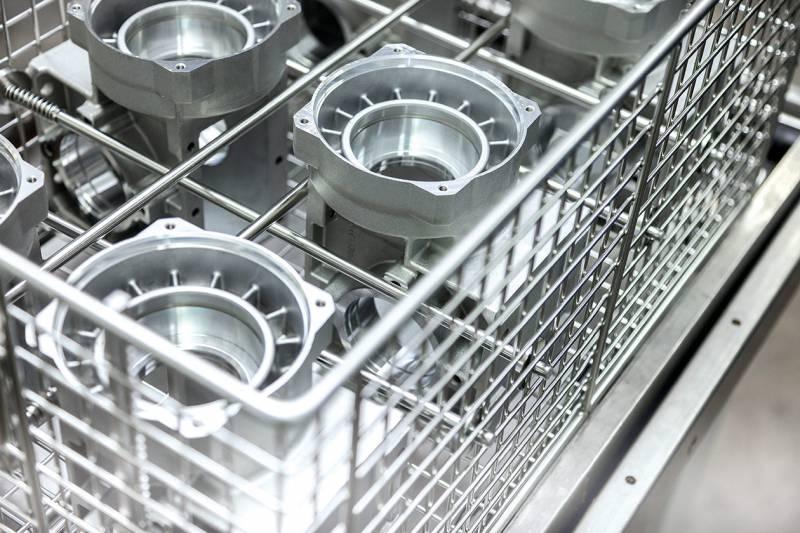
To improve corrosion resistance and paint adhesion, conversion coatings are applied to base metals such as iron or zinc before painting. Acidic or alkaline process solutions form chemical compounds with the substrate which contribute to good coating adhesion.
Processes used to convert surfaces include phosphating and chromating. The chemicals used for these processes must be thoroughly rinsed off after pretreatment. Any residues would impair the bond between the coating layer and the surface.

Effect of Binders
The composition of the coating also has a significant influence on adhesion. Coatings generally contain binders, also known as film formers. These additives ensure strong cohesion within the paint film by curing and crosslinking during drying. Mechanical interlocking with the substrate increases in strength as a result. Examples of binders include curing oils, polyurethanes, natural and synthetic resins.
Influence of Film Thickness
Many coating systems are based on water or other solvents that evaporate as the coating dries. If the film is too thick, the surface hardens before vapors from the lower layers can escape. In this case, proper paint adhesion is no longer guaranteed.
If a thicker coating than the manufacturer’s specified film thickness is required, multiple coats must be applied. Adequate drying times must be observed between individual coats. Sanding each layer before applying the next helps achieve the required adhesion.
Drying Conditions
Coatings require sufficient time to dry and cure. Depending on the coating system, it may take several days before the surface reaches full serviceability. If the coating layer is subjected to stress too early, there is a risk of detachment. Temperature, humidity, and ventilation conditions during the drying phase influence the properties of the coating layer and thus paint adhesion. The optimal conditions are determined by the product manufacturers and are specified in the respective technical data sheets and instructions for use.