 Kluthe Magazine
Metalworking fluids are essential for surface processing. But what composition do they have? And which ingredients are used? Learn more.
Fluid Composition Fundamentals
When machining speeds were limited by muscle power, heat generation played only a minor role. When machines were introduced, vegetable oils and animal fats were sufficient to reduce friction. Today’s machining speeds require cooling lubricants whose composition, in addition to base oils, includes a range of additives. This results in a wide variety of complex, hydrocarbon-based mixtures tailored to specific manufacturing processes.
Base Oils
Base oils form the main component of non-water-miscible metalworking fluids and concentrates for water-miscible fluids. Their primary function is to reduce friction. This lowers heat generation during machining and decreases tool wear. Lubrication also ensures that requirements for surface quality can be met.
Base oils are derived from petroleum, vegetable oil, or synthetic organic compounds. GtL oils, produced through several processing stages from natural gas, are becoming increasingly important.
Mineral Oils
Mineral oils are fairly inexpensive lubricants. Derived from petroleum, coal, or natural gas, they primarily consist of chain- and ring-shaped saturated hydrocarbons with eight to twelve carbon atoms per molecule. In chemistry, these are known as alkanes, isoalkanes, or cycloalkanes. These substances are relatively inert and retain their chemical properties under normal environmental conditions for extended periods.
When mineral oils are refined from petroleum, they contain many impurities from the raw material. GtL oils are significantly purer. The abbreviation GtL stands for “Gas to Liquids,” which refers to their origin. Their production requires more effort, which is why GtL oils are more expensive than petroleum-based mineral oils. They are primarily used as ingredients in non-water-miscible metalworking fluids.
Vegetable Oils
Oils from renewable resources are also foodstuffs. Their unsaturated fatty acids are valuable nutrients that readily form chemical bonds with a wide range of binding partners. Naturally, these oils are biodegradable. They tend to polymerize and turn rancid quickly through oxidation. These properties limit their suitability for use in metalworking fluids. To make them usable, extensive processing and higher amounts of biocides are required. They are most often used as non-water-miscible fluids.
The limited availability of petroleum and gas reserves, however, makes it necessary to seek alternatives. As a result, more research is being done on developing fluid ingredients from renewable resources. New processes will help offset the disadvantages.
 © opticaltech – stock.adobe.com[/caption]
Synthetic Base Materials
Some organic chemical compounds have properties similar to mineral oils. These include esters, which consist of alcohols and organic acids. Alcohols are characterized by one or more OH groups in the molecule, while organic acids contain a COOH group. These groups react to form stable chemical compounds. Since these ingredients are generally water-soluble, they are especially suitable as a basis for water-miscible metalworking fluids.
Additives
The list of additives available is extensive. They are used to tailor the properties of metalworking fluids to specific applications. The best way to categorize them is by intended effect.
Antioxidants
Oil aging is usually caused by oxygen in the air, which reacts with oil molecules—especially at elevated temperatures—forming solid compounds. These deposit as sludge in tanks and pipelines, disrupting circulation and reducing available volume.
Antioxidants reduce oxidation either by capturing oxygen, decomposing oxides, or occupying the reactive sites where oxygen would otherwise attack.
Preservatives
In water-miscible fluids and non-water-miscible vegetable oils, bacteria and fungi can multiply. Preservatives (biocides) kill microorganisms or inhibit their growth.
Biocides are usually mixtures of active ingredients covering a broad spectrum of microorganisms. Their concentration must precisely follow application guidelines. Insufficient amounts lead to resistance, while excessive amounts can cause health risks for workers handling them.
Adhesion Improvers
Adhesion improvers are often found in non-water-miscible fluids and they help to ensure a stable oil film on tools and workpieces. They prevent the oil from running off or being thrown off too quickly. In water-miscible fluids, additives with the same effect are called wetting agents.
Anti-Mist Additives
Anti-mist additives lower the vapor pressure of metalworking fluids and influence flow behavior. They significantly reduce the generation of harmful oil aerosols.
Extreme Pressure (EP) Additives
High contact pressures can cause metal surfaces to weld together. Extreme pressure additives (EP additives) prevent this. They are based on sulfur, phosphorus, or chlorine compounds which are substances that are hazardous to health and strictly regulated.
Emulsifiers
Emulsifiers enable the mixing of water with water-insoluble mineral oil. Their molecules have one hydrophobic (water-repelling) and one hydrophilic (water-attracting) end. This allows them to bind an oil molecule to a water molecule.

Corrosion Inhibitors
Water-miscible fluids can cause corrosion of workpieces and tools. Corrosion inhibitors form protective layers on surfaces that block water penetration.
Defoamers
During spraying or circulation of metalworking fluids, unwanted gas bubbles can form. With viscous oils, these bubbles are particularly fine and stable. Foam interferes with tool–workpiece contact, impairs cooling, promotes oxidation, and may cause overflow. Defoamers reduce surface tension and break the thin films around gas bubbles.
Metalworking Fluids: Why Composition Matters
The exact composition of metalworking fluids is a trade secret. If ingredients are safety-relevant, they and their properties are listed in the required safety data sheets. Otherwise, manufacturers provide information on suitable processes and required materials, along with the effects of the contained additives.
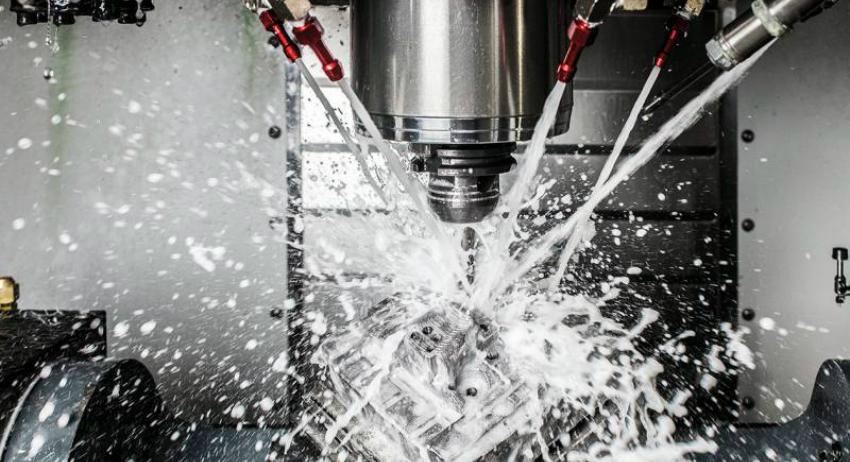
In addition to the primary composition of metalworking fluids in their delivered state, manufacturers also supply secondary additives. These include biocides, defoamers, anti-mist additives, and pH regulators, which are consumed during operation or used to keep process conditions within the required range.