 Kluthe Magazine

« Key Areas for Environmental Action in the Chemical Industry »
Growing public interest in sustainability is prompting more business leaders to take responsibility for a sustainable future and to implement improved environmental measures within their organizations. The chemical industry, with its high production volumes, plays a key role in this regard. Learn where opportunities arise within the chemical industry to enhance sustainability at the corporate level.
Green Chemistry as a Guiding Principle for Environmental Protection in the Chemical Industry
Corporate environmental initiatives primarily focus on reducing energy consumption, using raw materials efficiently, and preventing waste and harmful emissions from being released into the environment. Specific measures for chemical companies can be derived from the 12 principles of green chemistry. You can find detailed explanations in our article “Sustainable Chemistry.”
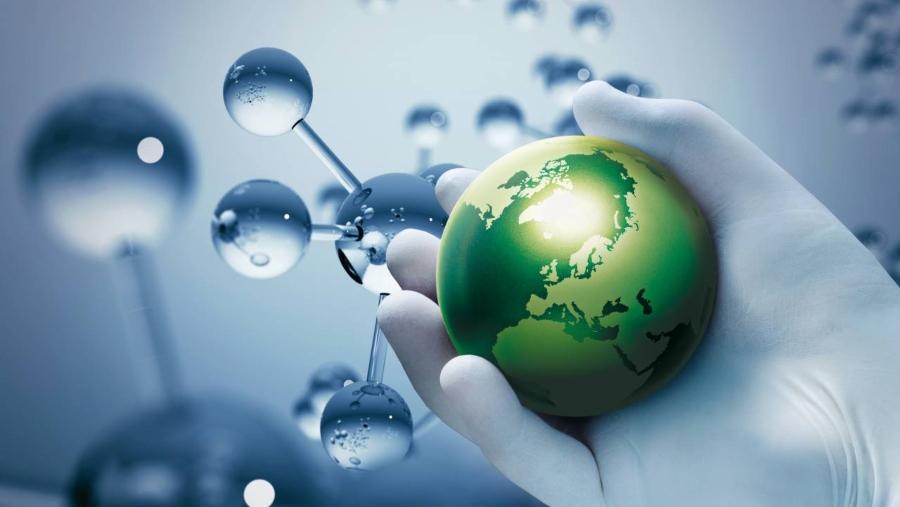
However, the influence of chemistry extends far beyond its own production processes. Very few industries operate without products from the chemical sector. This creates enormous potential to promote environmental protection in companies that use these materials. The chemical industry can help shape a more sustainable overall industrial landscape by developing chemicals that, for example, require lower consumption, can be processed with less energy input, are safe to handle, and can be recycled.
Research and Development for Sustainable Chemical Technologies
Effective sustainability strategies require innovative technologies that consider the entire product life cycle. Several key questions arise in this context:
- Where do the raw materials originate?
- Which basic chemicals are derived from them?
- Which specialty chemicals are required for a specific product?
- Are the production processes used sustainable?
- Under what conditions is the product applied?
- Can the product be recycled or disposed of in an environmentally responsible manner?
Kluthe has established a research and development department with more than 80 specialists who address these questions. In addition to improving its own environmental performance through innovative solutions, the company also supports the environmental protection efforts of its customers.

Concrete Environmental Protection Measures in the Chemical Industry – Practical Examples
Environmental protection in the chemical industry means more than theoretical concepts. Practical examples show how targeted sustainability initiatives can be implemented effectively. A central approach is the circular economy. Instead of disposing of packaging after a single use, Kluthe relies on reconditioned drums. These environmental measures save approximately 300 metric tons of CO2 per year. After use, the drums are cleaned, inspected, and refilled—an excellent example of how environmental protection in companies can combine ecological and economic benefits.
Additional efforts focus on process optimization. The use of energy-efficient production systems can significantly reduce electricity consumption. Heat recovery systems utilize waste heat from chemical reactions for heating purposes. In water management, closed-loop systems conserve fresh water and reduce wastewater volumes. In modern chemical facilities, solvents are distilled and reused instead of being disposed of. These examples demonstrate that sustainable action and economic success can go hand in hand. In the long term, these investments pay off through lower raw material usage and disposal costs.
Environmental Protection in Core Areas of the Chemical Industry
The chemical industry includes the following core areas:
- organic and inorganic basic chemicals
- plastics
- fine and specialty chemicals
- pharmaceutical active ingredients
In all core areas, the 12 principles of green chemistry should be implemented to promote environmental protection, and the social impacts of business activities must be considered in decision-making.
Organic and Inorganic Basic Chemicals
Organic and inorganic basic chemicals are primarily derived from petroleum, coal, biomass, minerals, oxygen, and nitrogen. Examples of organic basic chemicals include benzene, toluene, methanol, ethanol, and vinyl chloride. Inorganic basic chemicals include nitric acid, sulfuric acid, hydrochloric acid, potassium hydroxide, and sodium hydroxide. These substances are produced in large quantities with significant energy input and are then further processed by other companies into intermediate or end products.
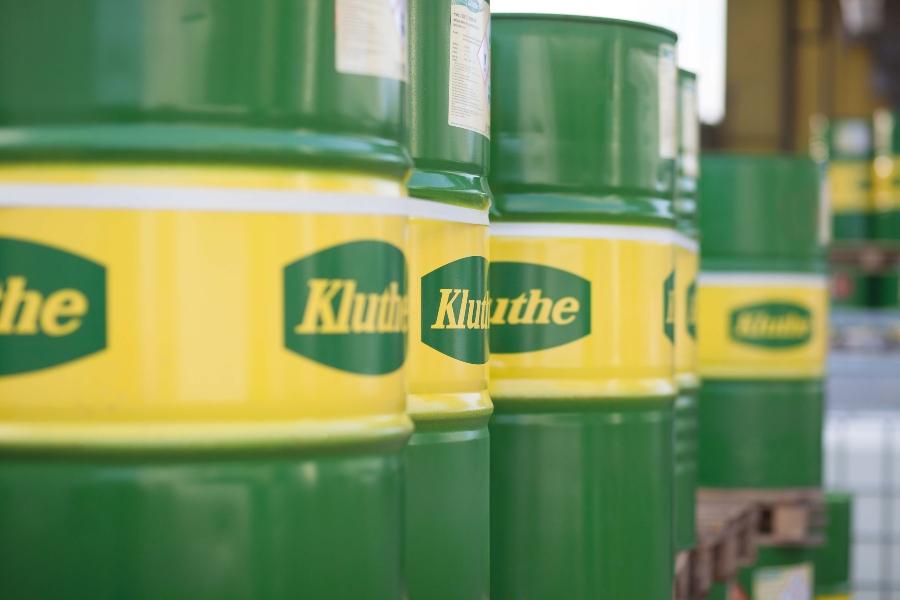
Environmental protection measures in this area focus primarily on saving energy and thereby reducing CO2 emissions, as well as improving the conditions under which raw materials are extracted. However, the environmental impact of raw material extraction is often overlooked.
Plastics
Plastics are produced in high volumes from organic basic chemicals. They are characterized by high chemical resistance and cost-effective availability. These same properties are also the reason for the environmental challenges they create. Environmental protection measures must therefore focus primarily on improving recyclability, particularly for composite materials. These materials are lightweight and help conserve energy during use. However, once products reach the end of their service life, waste management becomes a significant issue.
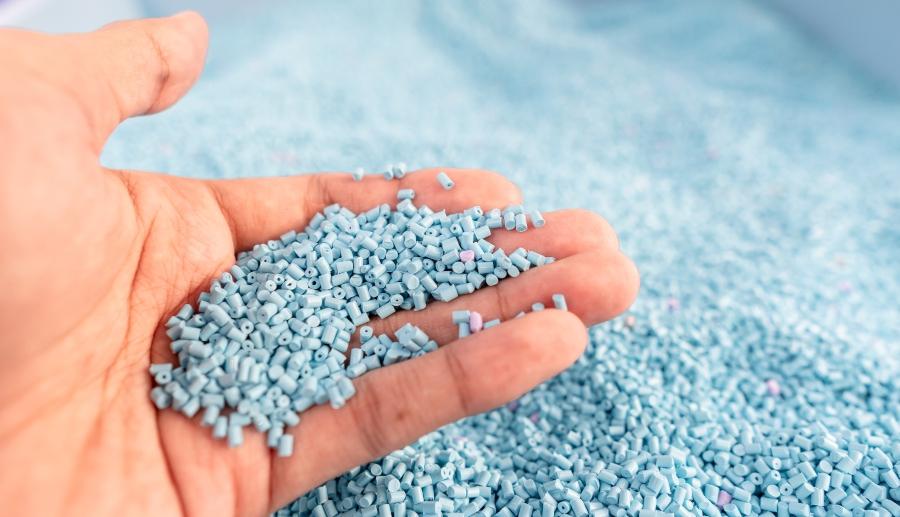
Appropriate environmental protection measures in chemical companies include reducing plastic use in items such as packaging and ensuring the proper separation and collection of plastic waste. In recycling, research and development in chemical engineering play a key role in developing technologies to address the problem. One approach is pyrolysis, in which plastics decompose into petroleum-like substances under high temperatures. In addition
Fine and Specialty Chemicals
Fine and specialty chemicals are produced through sometimes complex synthesis processes from various base materials. Fine chemicals such as those used for analytical purposes are substances that must be produced in small quantities and with high purity. Specialty chemicals are substances that are required because of their specific effects. This group includes paints and coatings, cleaning agents, adhesives, and personal care products. These substances are depleted during use. Therefore, it is essential not only to manufacture them according to green chemistry principles but also to ensure their safe handling by users.
To ensure environmental protection in companies and in private use, and to establish a sustainable industrial framework, these substances must be usable without harming health or the environment.
To achieve this, usage bans have been introduced for certain hazardous substances such as hexavalent chromium compounds, CFCs, mercury, and persistent organic pollutants that remain in the environment for extended periods.
Environmental protection measures must therefore aim to develop environmentally friendly substances that also deliver the intended performance.
Pharmaceutical Active Ingredients
In terms of environmental protection, the production of pharmaceutical active ingredients follows similar principles as fine and specialty chemicals. However, pharmaceutical substances are subject to specific drug regulations that govern approval procedures and quality standards in manufacturing. Many medications contain substances that can be harmful at elevated doses. Environmental protection measures in companies that manufacture such substances aim, for example, to prevent their release into the environment.
One contribution to sustainability and environmental protection in this field is the use of biotechnology. Many medicines are derived from plants and animals. Others are produced through chemical synthesis. If microorganisms can be harnessed to produce these active ingredients, energy and raw material consumption can be significantly reduced.
Successfully Implementing Environmental Protection Measures in Companies
Implementing environmental protection measures in industry requires a systematic approach. First, companies should conduct an assessment to identify where the greatest environmental impacts occur. Environmental protection guidelines help define clear objectives and assign responsibilities. A structured environmental management system in accordance with ISO 14001 provides a framework for continuous improvement in corporate environmental protection.
Successful examples show that involving all employees is essential. Training programs raise awareness of environmental protection in the chemical sector and encourage active participation. Regular audits and performance indicators make progress measurable. Examples of chemical products that have been successfully adapted can be found in companies that have consistently shifted their product portfolios toward environmentally friendly alternatives. Industry and environmental protection are not opposing forces. Modern environmental protection measures demonstrate that sustainable production creates competitive advantages, reduces costs, and strengthens corporate reputation. Companies that prioritize sustainability at an early stage secure long-term market share in an increasingly environmentally conscious economy.