Where Are Forming Lubricants Used?
Forming includes those manufacturing processes in which tools apply significant external forces to deliberately change the contours of materials. A prerequisite is the close interaction between material and tools, which enables force transmission while also allowing relative motion. The role of forming lubricants in this process, is to create these conditions. Here you can learn about the variety of forming processes and gain insight into how surface technology contributes to successful forming by providing optimal lubricants.
What Forming Processes Exist?
Classification According to DIN 8582
DIN 8582 is a German industrial standard that classifies forming processes based on the prevailing stress state in the material. While US manufacturers typically follow ASTM or ASME standards for materials and testing, DIN 8582 remains a widely referenced framework for categorizing forming methods internationally.
The effect of external forces depends on the amount of material being moved. Therefore, force is related to the cross-section of the workpiece affected by forming. The result is stress, expressed in psi or N/mm². The direction of the forces determines whether tensile, compressive, bending, or shear stresses occur. According to DIN 8582, the following forming processes are defined:
- Pressure forming (rolling, open-die forging, die forging, indentation, extrusion)
- Tensile-compression forming (drawing, deep drawing, flanging, metal spinning, buckling)
- Tensile forming (stretching, expanding, deepening)
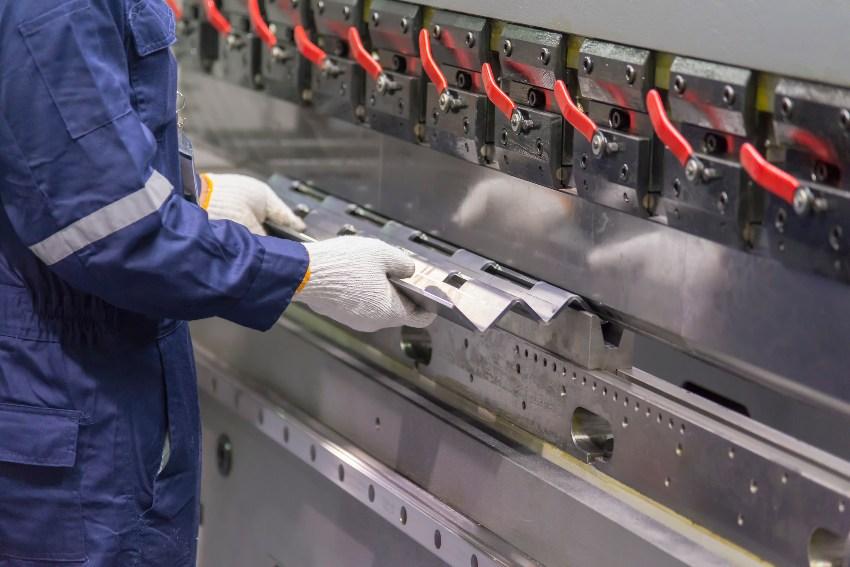
- Bending forming (bending with linear or rotational tool movement)
- Shear forming (sliding, twisting)
Manufacturing also depends on how strong the required forces must be. These values depend on the workpiece temperature and the characteristics of the semi-finished products.
© Pixel_B – stock.adobe.com
Classification According to Material Temperature
As temperature increases, material strength decreases, reducing the forces required for forming. However, high temperatures influence material’s structure and surface properties (eg., scale formation). Material structure can be restored through heat treatment, while surface treatment technology provides scale-removal methods. Classification by material temperature results in the following categories:
- Cold forming (at ~70 °F (20 °C); high forming forces; limited formability; good dimensional accuracy)
- Warm forming (e.g., steel at 1200–1650 °F (650–900 °C); medium forming forces, formability, and dimensional accuracy)
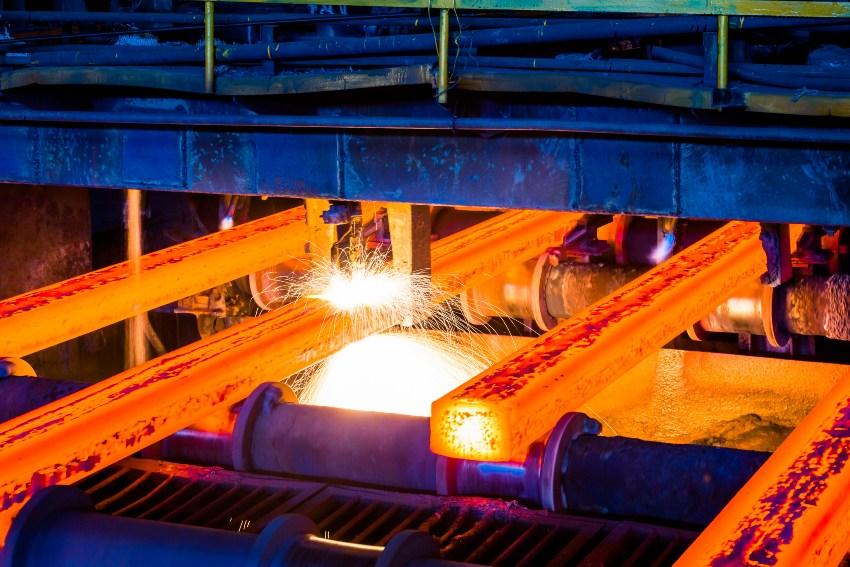
- Hot forming (e.g., steel at 1830–2280 °F (1000–1250 °C); low forming forces; very good formability; low dimensional accuracy)
© fanjianhua – stock.adobe.com
Classification According to Semi-Finished Product Properties
Forming forces depend on whether all three spatial dimensions are affected or only the length and width. For sheet metal, thickness is negligible relative to length and width and changes only slightly during forming. Required forces are therefore lower than in forming processes that alter length, width, and thickness. Thus, sheet forming is distinguished from bulk forming.
Forming Processes from the Perspective of Manufacturing
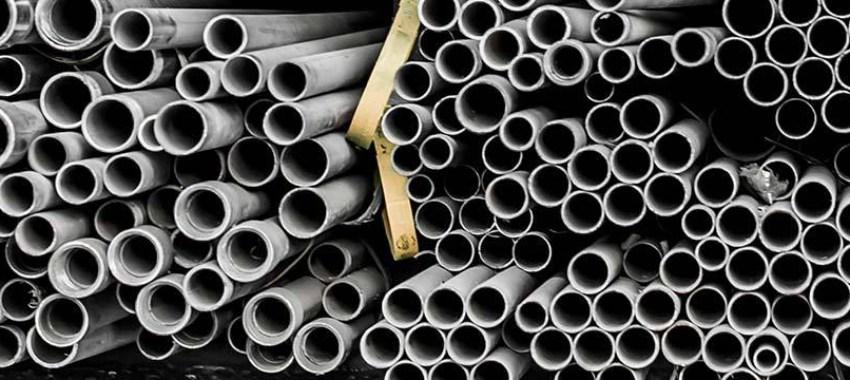
In manufacturing, the finished product is the focus. This leads to naming conventions based on the final product (e.g., tube drawing, wire drawing, profile drawing, extrusion) and names indicating combinations (e.g., cold forming + bulk forming = cold bulk forming). Forming processes are also further specified; for example, stretch drawing is a type of deep drawing using simple tools.
Additional Steps Enable Forming
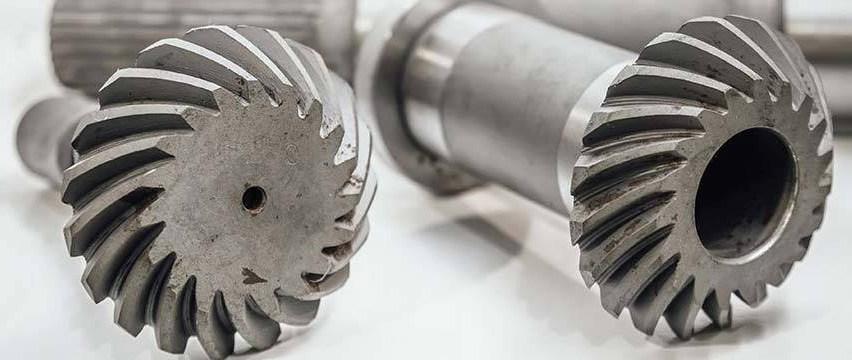
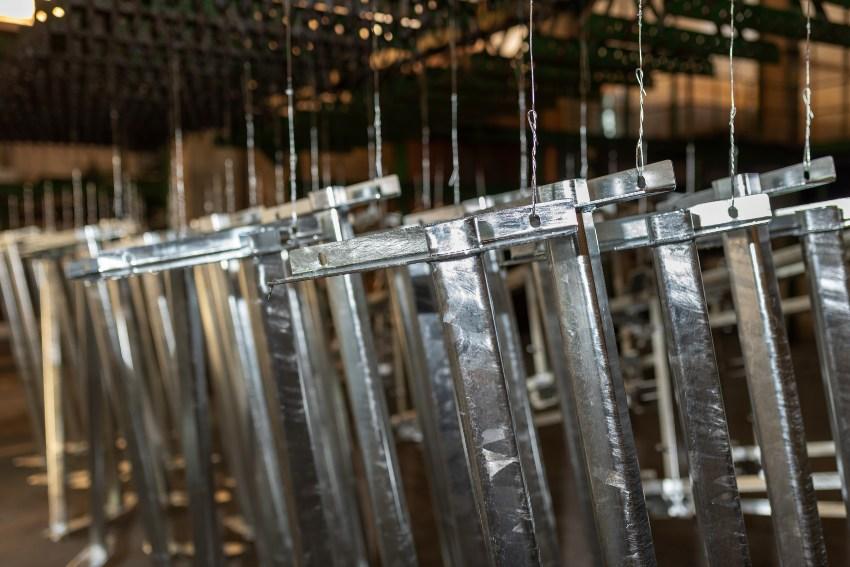
Manufacturing processes include additional steps such as heat treatment to establish or restore material properties and surface processing to prepare or finish semi-finished products. For example, surfaces must be descaled after hot forming. Surface processing also adjusts surface roughness to create optimal forming conditions. Successful cold bulk forming often requires specific conversion layers created through conversion processes.

Forming Lubricants – More Than Just Auxiliary Agents
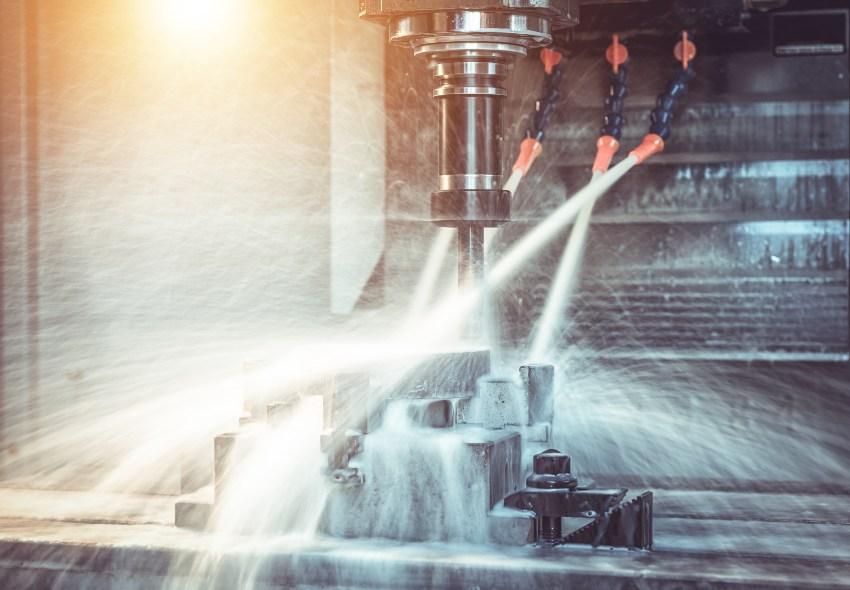
Forming lubricants must fulfill numerous tasks:
- reduce friction and wear
- wet surfaces uniformly
- transfer forces
- cool tools and materials
- protect against corrosion
- suppress effects of contaminants
© Sasint – stock.adobe.com
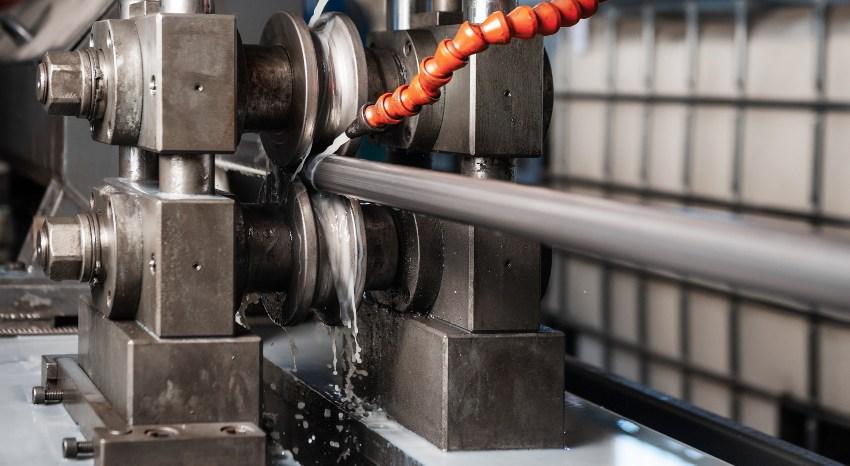
Their properties change with varying temperatures, forming speeds, and pressures. Lubricants must be tailored to each forming method. For example, oil suitable for thread rolling would evaporate at hot-forming temperatures of 1830–2280 °F (1000–1250 °C). A lubricant that performs well in sheet forming will fail under the extremely high pressures of cold bulk forming, such as tube drawing. Surface technology provides specialized lubricants for such conditions, including expander oils for enlarging large-diameter tubes.
As Varied as the Forming Processes, So Numerous are the Lubricants Used
Each forming process has an optimal lubricant, usually based on oil, grease, or solid lubricants. The selection depends primarily on forming temperature, while additives adjust the properties precisely to operating conditions.
Example: Hot and Warm Forming
Hot and warm forming commonly use mixtures of oil and graphite, oil and wax, and sometimes water. Water is an excellent coolant, as it absorbs large amounts of heat when evaporating. Emulsifiers and dispersing agents keep components evenly distributed. Additional additives support surface wetting, corrosion protection, and adhesion.
© bogdanvija – stock.adobe.com
Example: Cold Bulk Forming
Cold bulk forming begins at ~70 °F (20 °C). Temperature rises significantly during the process, and high forces can cause cold welding between tool and material surfaces. Lubricants must therefore remain stable across wide temperature ranges and prevent direct surface contact. Normal forming oil is insufficient. Surface technology provides solutions such as phosphate layers, which separate tool and material. Reactive oils produce similar results: their additives chemically react with the material, forming a protective layer that prevents cold welding and increases process efficiency.
[1] https://www.iph-hannover.de/de/information/umformtechnik/ueberblick-umformtechnik/