
Thinning agents, also called thinners, are liquids that reduce the proportion of chemical substances in a mixture. This helps adjust the consistency of paint so that it can be applied easily and efficiently. Paint thinners are solvents or blends of solvents specifically matched to the respective coating system. Because of these properties, they are also suitable as cleaning agents for equipment and for removing paint-related stains. When the primary purpose is cleaning, these solvent blends are offered under the general name cleaning thinners.
Primary Use of Thinning Agents for Paint
Most paints consist primarily of binders and solvents. The binder determines the final characteristics of the coating. The solvent ensures proper mixing of the paint components and allows the coating to be applied. As the applied layer dries, the solvent evaporates.
The time required depends on the volatility of the solvent. Highly volatile organic solvents evaporate very quickly and are commonly referred to as solvents. The proportion of solvent determines the flow properties of the paint. Commercially available paints typically contain only the minimum amount of solvent.
Shortly before processing, enough thinner is added to achieve the required flow behavior.
This allows the paint to be adapted to different coating methods such as brushing, rolling, spraying and to the requirements of each of the following layers primer, intermediate coat, and topcoat. The choice of thinning agent also influences drying time and the appearance of the coating.
Selecting Thinning Agents
Thinning agents for paints and coatings must always be appropriate for the overall system. Anyone choosing the “right” thinner from the wide range of options should consult the manufacturer or supplier. For thinning oil- and alkyd resin paints, turpentine oil is suitable. This high-quality substance is obtained from the resin of coniferous trees — hence the common name “pure turpentine.” A more affordable alternative with similar composition is mineral turpentine, derived from petroleum. Nitro-combination paints can be thinned with acetone. Another commonly used thinning agent for paints is denatured alcohol. This alcohol has been treated to make it unsuitable for consumption and exempt from the taxes levied on alcoholic beverages.

Acetone and denatured alcohol evaporate very quickly. To slow evaporation — and therefore improve leveling and gloss — chemically similar substances with lower volatility are blended into universal thinners. These solvent blends are engineered for a specific evaporation profile. Universal thinners are available in fast-, medium-, and slow-evaporating versions. If a very fast-drying coating is required, a fast-evaporating thinner is used.
Slow-evaporating thinners produce a high-gloss surface. Kluthe offers these products under the brand name “Lösin.” These solvent blends consist primarily of acetone, straight-chain and cyclic hydrocarbons, alcohols, esters, and aromatic ring compounds derived from benzene. The latter are collectively referred to as aromatics.
For paints that contain no aromatic solvents, Kluthe’s product range includes a specifically formulated aromatic-free universal thinner.
Straight-chain hydrocarbons are also the main components of a solvent commonly known as ‘white spirit’— a term derived from its volatility (‘spirit’) and water-clear appearance (‘white’). These molecules consist of a chain of carbon atoms with attached hydrogen atoms. In cyclic hydrocarbons, the carbon atoms form a closed ring. If one hydrogen atom is replaced by an OH group, the result is an alcohol; if two OH groups are present, it is glycol. Organic acids such as acetic or formic acid readily attach to OH groups to form esters or ethers.
Use of Thinning Agents for Cleaning
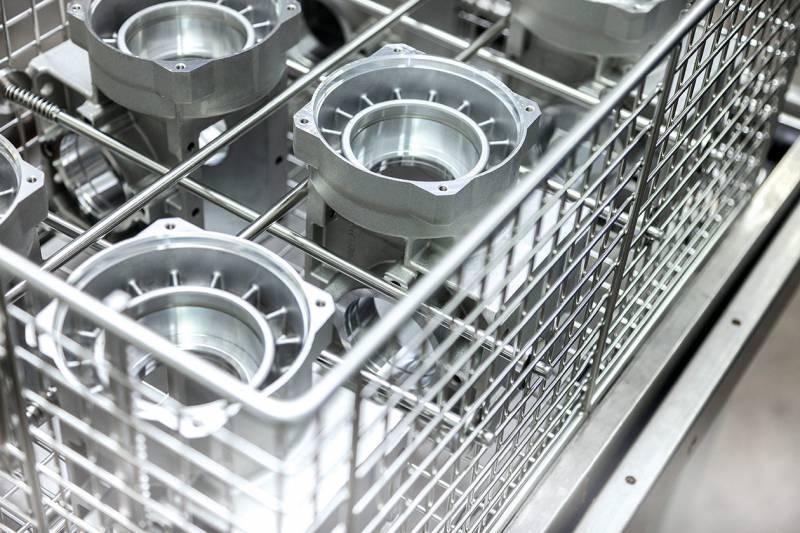
Equipment used for coating must be cleaned immediately after finishing the work to remove paint and coating residues. Thinners for the respective paints are also suitable for cleaning agents. They are also used to remove paint stains from floors or furnishings. Compatibility with the affected surfaces must always be considered. Most cleaning thinners also dissolve fats and oils well, which is why they are frequently used for degreasing surfaces — even outside coating applications.
Familiar cleaners include not only specialty paint thinners but also ammonium hydroxide solutions and denatured alcohol. Turpentine oil is highly effective for cleaning wooden floors and wooden objects.
Handling Thinning Agents and Cleaning Thinners
Most thinning agents and cleaning thinners are flammable liquids. Fast- and medium-evaporating substances generate enough vapor at normal room temperatures to form a flammable atmosphere when mixed with air. In such cases, even a small spark can trigger an explosion.
These vapors are generally harmful to one’s health. After inhalation, they quickly accumulate in the fatty tissue surrounding the nerves, which may cause drowsiness or dizziness. Adequate ventilation is therefore essential when using thinners, and all open flames must be avoided.
Because thinners dissolve fats, repeated or prolonged contact affects the skin, making it dry and cracked. This can be prevented by wearing protective gloves and using skin-care products. Technical data sheets and safety data sheets provided by manufacturers contain detailed information about ingredients, safe handling, and the correct disposal of leftover quantities.