
Emerging Trends in Reuse and Recovery
Global raw material reserves are finite. Humanity consumes more resources than nature can regenerate. At the same time, so much waste is generated that the environment is overwhelmed by the burden. This situation calls for action: recycling conserves resources and reduces environmental impact. If the foundations of life on Earth are to be preserved, recycling must be pursued much more intensively in the future. What types of recycling are there? What contribution can the chemical industry make to recovering valuable materials? Here is what you need to know.
Capabilities and Limits of Recycling
Recovering valuable materials from waste requires a certain amount of energy and, in many cases, processing chemicals. The scale of this effort depends primarily on how many different materials the waste contains and how strongly these are bonded or intermixed.

The chemical industry can provide and develop processes that enable material separation and the transformation of processed substances back into raw materials. Whether the required effort is justified and to what extent circular chemistry can be applied, depends on the specific properties of the waste. That is why more effective recycling will only be possible if recyclability is built into product design and manufacturing.
It is also necessary to harmonize the design of components that serve the same function so that they are interchangeable. This has long been the case with screw threads and electrical connectors. A tentative step in this direction is the unification of charging cable connections for cell phones.
Future Recycling: An Overview of Key Types
In the future, three distinct types of recycling will continue to be utilized:
- Material recycling (recovery of raw materials)
- Production waste recycling (direct recycling of industrial waste)
- Product recycling (reuse of materials and components)
Prevention of waste generation always takes precedence over recycling. Since this principle cannot be fully realized in the future, recovery and reuse in industry will become increasingly important. The recycling methods used should require as few process steps as possible, consume little energy, and make use of circular chemistry.
Material Recycling
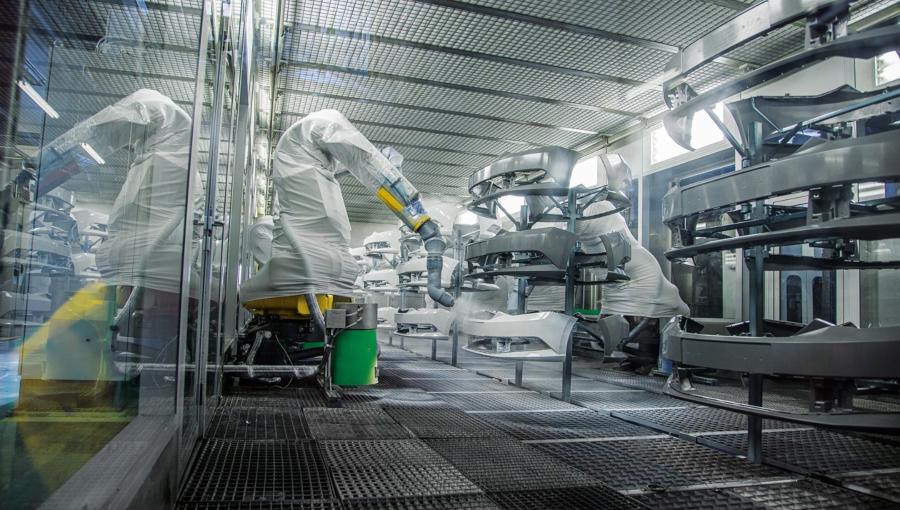
The chemical industry is particularly important for material recycling in the future. If an object or its individual parts can no longer be used, at least the materials they contain should be returned to the economy. Material recycling begins with dismantling products into their components and separating the materials. Through further processing steps that ideally meet the principles of green chemistry, the materials can once again be made available to industry as raw materials.
Material Recycling of Metal, Glass, and Paper
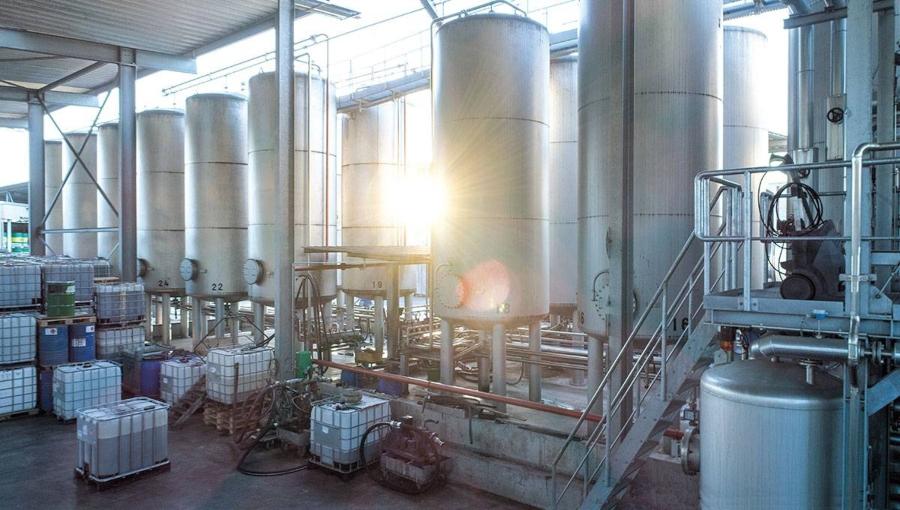
Metals are the easiest to sort and recycle. Different physical properties such as electrical conductivity, density, solubility, or melting point make it possible to automate this process—at least in part. The recovered metals are melted down and cast into new products or semi-finished goods. Metallurgy has used this type of recycling throughout history. The recycling of wastepaper and glass has a similar history. For glass and paper recycling, the chemical industry has developed processes that consume less water, energy, and processing chemicals than producing these materials from virgin raw materials. These methods will also maintain their importance for recycling in the future.
Material Recycling of Plastics
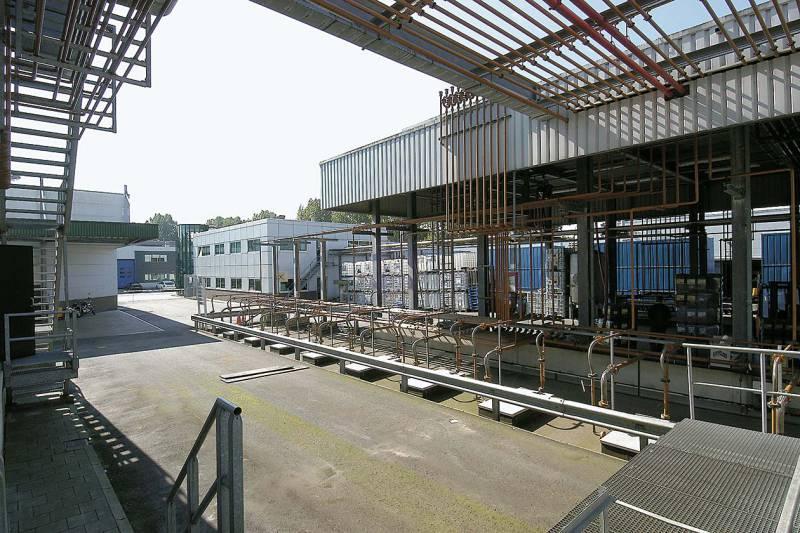
Material recycling is more difficult with plastics. Their closely related physical properties make it harder to separate materials. That is why collecting recyclable materials separately is especially important here. For mixed plastic waste, the chemical industry has different processes (pyrolysis, liquefaction, gasification) that break the material down into its basic building blocks and make them usable again as raw materials. However, these processes require so much energy that energy recovery is still more economical at present. If the chemical industry succeeds in further improving these methods, material recycling of plastics will gain importance in the future.
Production Waste Recycling
In manufacturing, material waste and sometimes defective goods are generated on a regular basis—including in surface treatment. In these cases, composition and properties are well known, and contamination is minimal. As a result, recycling in industry is relatively straightforward. The best-known example is the return of chips and scrap from metalworking into the economy. Collected by type, this waste also generates a worthwhile return.
In the chemical industry, most waste consists of used process chemicals. These can be broken down into their components by various separation processes. Many chemical companies operate facilities in which they reprocess residual materials from their customers. For this purpose, Kluthe founded the subsidiary Rematec. Rematec has developed specialized patented processes that use circular chemistry for processing waste from the chemical industry.
Product Recycling
Product recycling preserves either materials or complete components. In this area, reuse and repurposing takes place. Reuse means employing a part again after an overhaul. Repaired and cleaned, the components resume their original function. This is the case, for example, with reusable deposit bottles. Frequently, old car parts also get a second life in this way. Repurposing uses materials for a new purpose. A well-known example is single-use deposit bottles that are collected by type and processed into granulate. New plastic products can then be manufactured from this.

The prerequisite for product recycling is careful separation of waste. For future recycling, deposit systems will therefore become increasingly common. Current practices such as separating household waste and returning electronics or batteries do not attract enough participation from the public and industry. Corresponding deposit systems would provide stronger motivation in the future.
Sources:
[1] https://ethz.ch/content/dam/ethz/special-interest/mtec/sustainability-and-technology/PDFs/ETH%20Global%20Recycling%20Survey%202020.pdf
[2] https://easac.eu/fileadmin/PDF_s/reports_statements/Plastics/EASAC_Plastics_complete_Web_PDF.pdf
[3] https://www.oeko.de/oekodoc/2594/2016-108-de.pdf